A Beginner’s Guide to Tallow for Aging Skin
What it is, what it does, and what no jar can promise.
Tallow is rendered animal fat. That plain definition is less glamorous than much of the language surrounding it—and considerably more useful.
In skincare, a well-prepared tallow can lend richness, structure and a protective feel to a balm. But “tallow” does not describe one uniform ingredient. Species, diet, the particular fat used, handling, rendering and the rest of the formula all shape what reaches your skin.
Why changing skin may appreciate a balm
As skin changes with age, it often feels drier, thinner or less forgiving. A balm can help reduce the feeling of moisture escaping by leaving a soft, emollient layer on the surface.
That can make skin feel more comfortable, supple and protected. It does not mean tallow is identical to human sebum, nor does it prove that a balm rebuilds the skin barrier or reverses aging.
Comfort is a worthy goal. We do not need to turn it into a miracle.
Not all tallow is the same
Ask where the fat came from. Ask which fat was used. Ask how it was rendered, how freshness is managed and what else is in the formula.
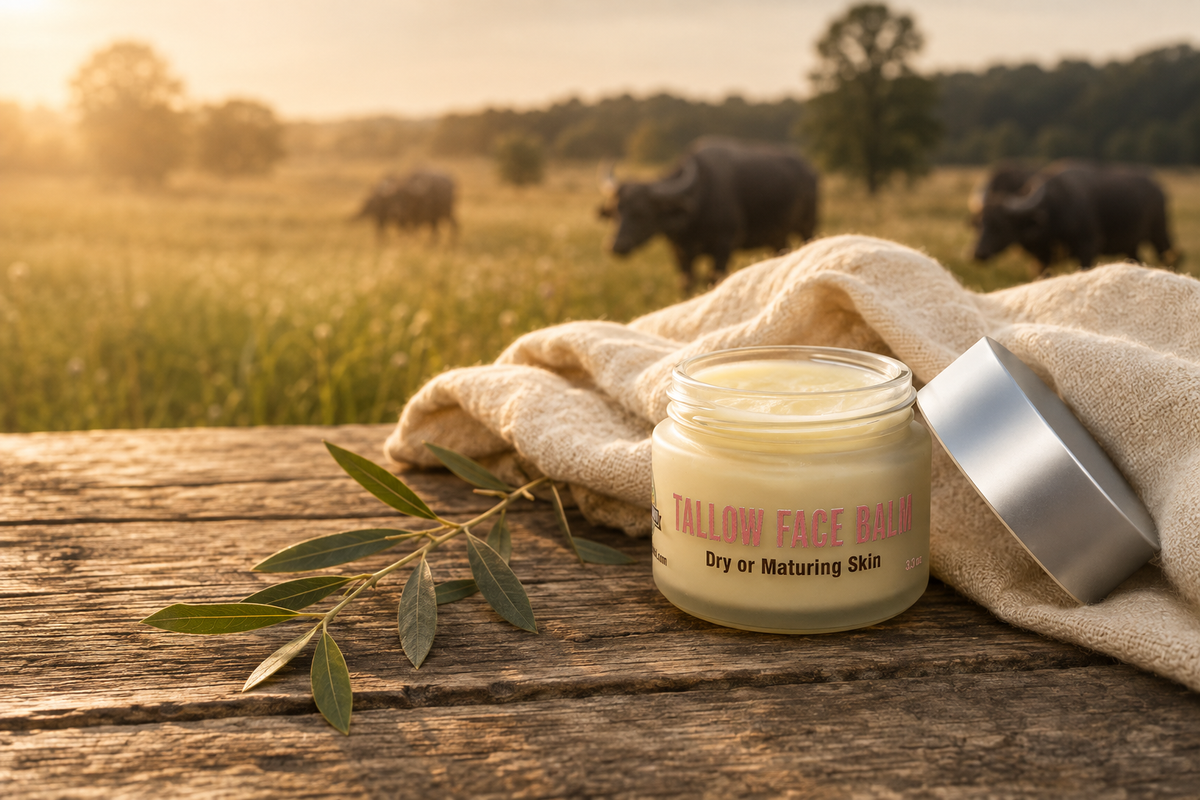
We use 100% grassfed water buffalo tallow from animals raised at Carrell Farms -- my farm. I dry render it gently and formulate with it as a known raw material—not an anonymous commodity.
Our laboratory testing showed that our submitted buffalo sample had a fatty-acid profile meaningfully different from the grassfed beef sample tested beside it and with other known beef tallow samples.
Read the complete formula
A tallow balm is rarely only tallow. Oils, butters, waxes, botanicals, essential oils and antioxidants influence texture, scent and suitability.
For sensitive skin, “no essential oils added” may be a sensible starting point. Still, any botanical or cosmetic ingredient can disagree with an individual. Patch testing is unglamorous but wise.
How to use it
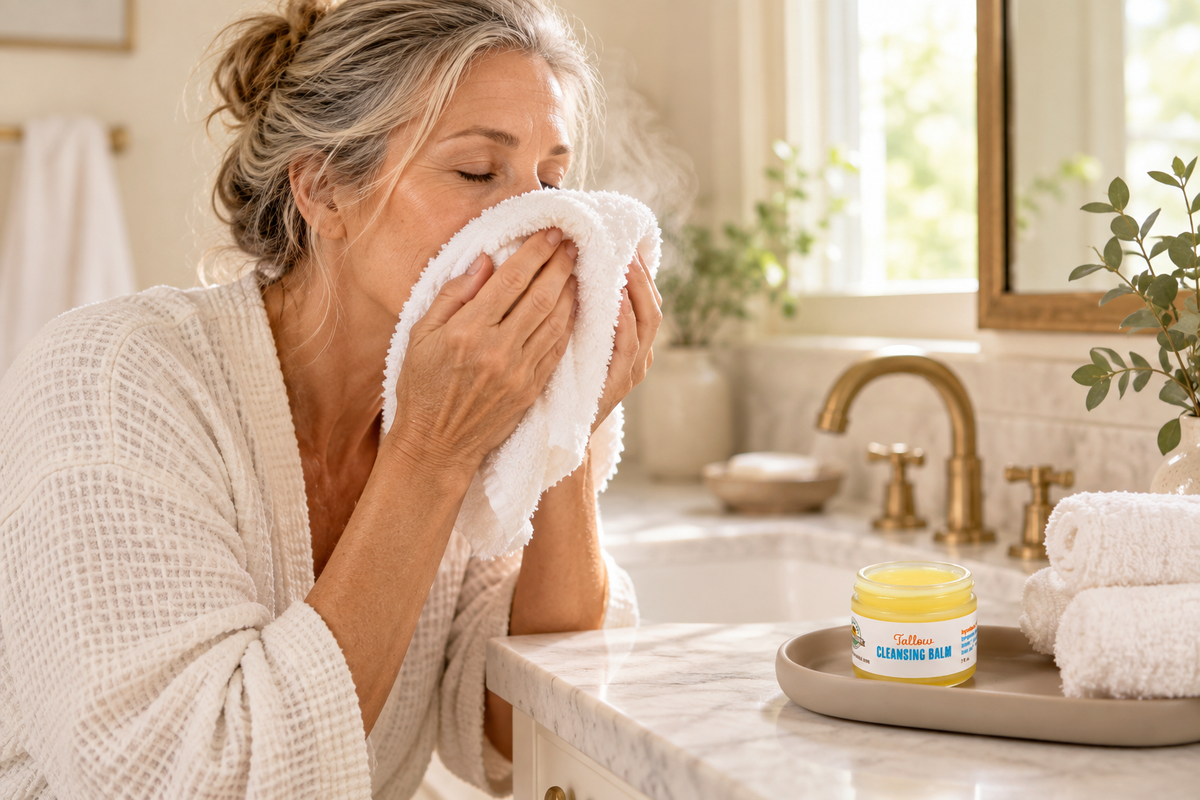
Begin with less than you think you need. Warm a small amount between your fingertips and press it onto clean, slightly damp skin. Add more only where your skin asks for it.
If it feels heavy, reduce the amount or reserve it for evening and drier areas. If discomfort or irritation persists, stop.
Choose discernment over devotion
Tallow can be a beautiful ingredient for aging skin. It can also be too rich for some people, and a poorly considered formula does not become excellent because tallow appears on the label.
Look for transparency, restraint and a maker willing to tell you what the evidence does—and does not—say.