How to Tell Whether Aging Skin Wants Water, Lipids—or Both
There’s a particular kind of annoyance in putting on something lovely at the bathroom sink and feeling your cheeks pull again before the coffee’s ready. So you reach for more of whatever you just used. Reasonable. Also how I end up with a shiny forehead and cheeks that still have opinions.
If your skin feels different in midlife, there’s a reason to give an old routine a fresh look. Around menopause, skin can become drier and have a harder time holding on to water. Two things are worth thinking about when you moisturize: how to help the outer layer hold water, and whether a richer finish would make your skin feel softer and more comfortable. Lipids are fats and oils. In a moisturizer, they can help soften the surface, while ingredients like glycerin help it hold water. How much a product does of either job depends on the whole formula.
Start with the step you already have
If you usually let your face dry completely before you moisturize, try applying your usual moisturizer while your skin is still slightly damp from cleansing. If you’re choosing a moisturizer, ingredients such as glycerin help the outer layer hold on to water. Plenty of creams already combine ingredients that do this with oils or other ingredients that soften skin or slow water loss. One product may do both jobs quite nicely.
I’d start there because it’s a small change you can try with what’s already beside the sink. There is a surprising amount of freedom in leaving the rest of the bathroom cupboard alone.
See what a richer finish adds
If your usual moisturizer feels good at first and your cheeks still feel dry later, try a thin layer of a balm you already tolerate on those spots at night. A balm can give rough-feeling areas a softer finish. Some richer formulas also help slow water loss, and how much they do depends on the formula.
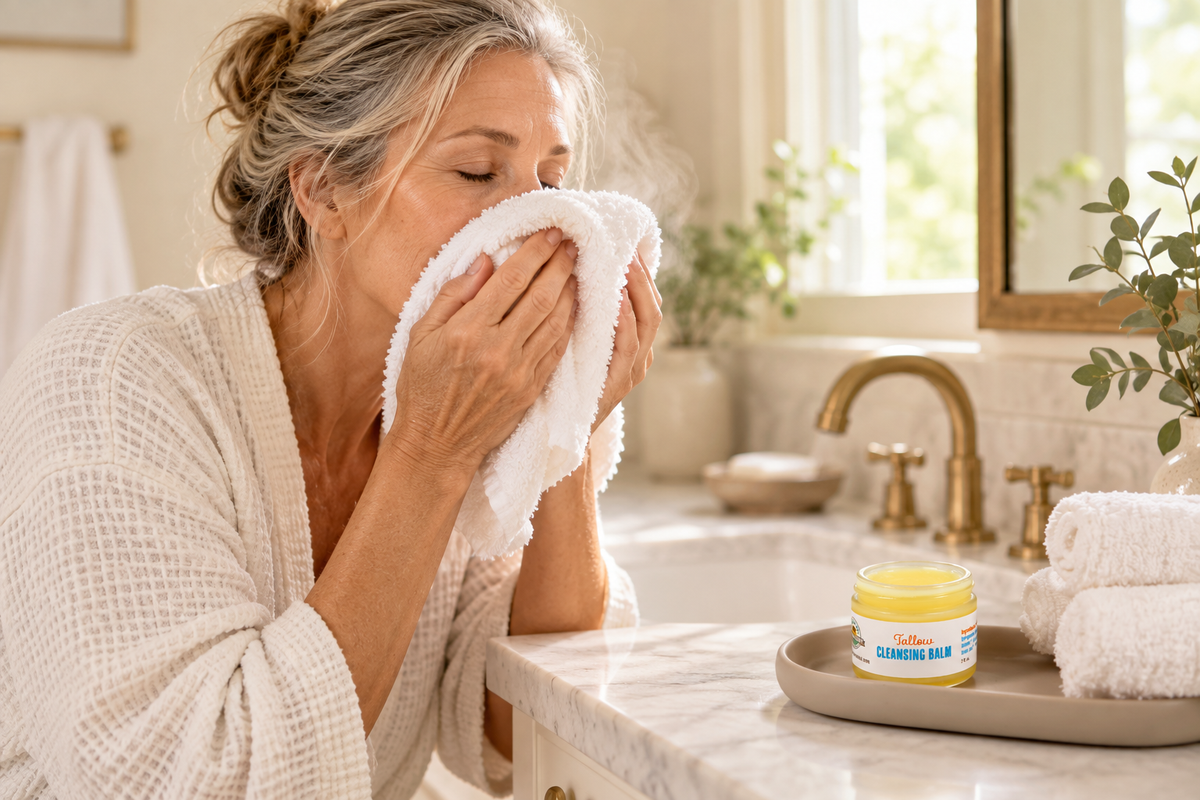
At Carrell Farms, we raise the 100% grassfed water buffalo whose tallow goes into my Tallow Face Balm. In this routine, the balm is the richer finishing step. I’d start with a small amount and keep it to the places where I want that extra cushion. If the moisturizer alone keeps your skin comfortable, you can stop there.
Change one thing and check back later
Try the damp-skin step first. Check in later that evening and notice whether your skin still feels comfortable. On another evening, keep the rest of the routine the same and add a little balm where you usually feel dry. Pay attention to how it feels later as well as how it goes on.
Tightness and flaking can have more than one cause, and how your skin feels can help you compare routines. For dryness that persists despite moisturizing, a dermatologist can help you work out what’s going on.
Tonight, try your usual moisturizer on slightly damp skin. That’s enough of an experiment for one evening.
If you’d like to read more about the role of lipids, start with Why Aging Skin Needs Lipids.
— Shalley