Why Lipids Matter More Than Moisture
Why Lipids Matter More Than Moisture
If your skin has become drier with age, you have probably been told that it needs more moisture.
Drink more water.
Use a hydrating serum.
Apply moisturizer to damp skin.
Add another layer.
Those things may help. But if your skin still feels tight again by midday—despite all that hydration—the problem may not be a lack of water alone.
Your skin may be asking for lipids.
Water is only half the story
Healthy skin needs water. But it also needs the fatty substances that help keep that water where it belongs.
These substances are called lipids.
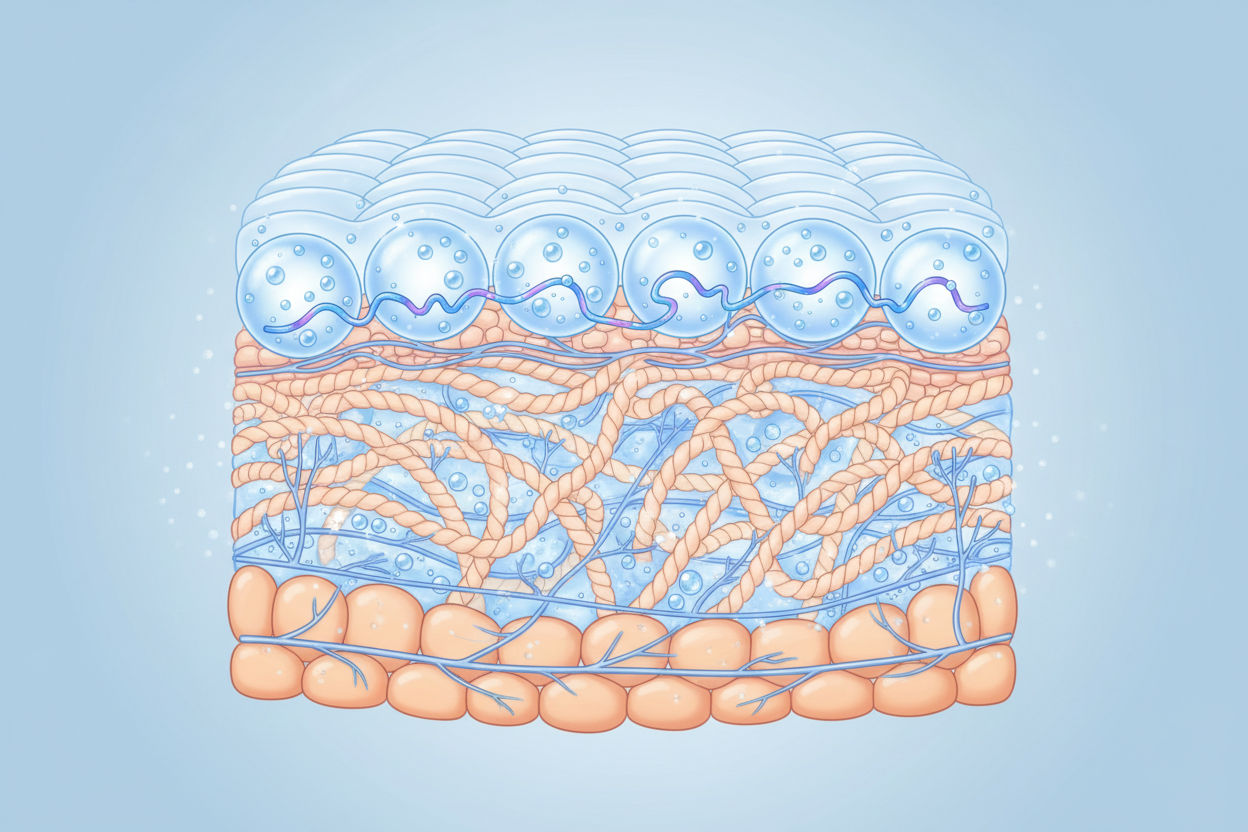
They are part of the structure of the skin’s outermost layer, the stratum corneum. This protective layer is often compared to a brick wall: skin cells form the “bricks,” while a carefully organized mixture of ceramides, cholesterol, and fatty acids forms the “mortar” between them.
That lipid-rich mortar matters.
It helps slow the escape of water from the skin. It helps protect against environmental irritants. And it helps the skin feel comfortable, flexible, and resilient rather than tight, rough, or easily unsettled.
In other words, hydration gives skin water. Lipids help create the conditions that allow skin to retain it.
Why doesn’t water alone solve dryness?
Imagine pouring water into a vessel with tiny cracks in it. You can keep adding more, but the vessel will have difficulty holding on to what it receives.
Something similar can happen at the skin’s surface.
A water-based mist, essence, or hyaluronic acid serum can temporarily increase hydration. But when the skin’s protective lipid structure is depleted or disorganized, that newly added moisture may not remain for long.
This is why a product can feel wonderfully refreshing when you first apply it, yet leave your skin feeling dry again an hour later. The product may have supplied water without giving the skin enough support to keep that water from escaping.
This does not make hydration products useless. It simply means hydration and moisture retention are not the same thing.
For many women with aging skin, the most effective approach is not choosing water or lipids. It is understanding the role of both—and recognizing that repeatedly adding water may not address what the skin is missing structurally.
What changes as skin ages?
Skin does not suddenly “fail” when we reach midlife. But it does change.
Sebum production generally decreases with age, leaving less natural oil at the skin’s surface. Research has also found changes in the composition and organization of the lipids within the stratum corneum. Around menopause, hormonal shifts can affect hydration, elasticity, thickness, barrier function, and the way skin responds to its environment.
You may notice that products you used for years no longer seem sufficient. Your skin may feel tighter after cleansing, become more reactive, or seem simultaneously dry and easily congested. You may find yourself applying more products without feeling more comfortable.
This does not necessarily mean that your skin needs to be exfoliated more aggressively or corrected with stronger actives.
It may simply be asking for a different kind of care.
Aging skin often benefits from less stripping, less chasing, and more support for the barrier it already knows how to build.
Lipids are part of the skin’s architecture
We often talk about skincare ingredients according to what they do: brighten, smooth, plump, exfoliate, or firm.
Lipids are quieter than that.
They are not exciting because they force the skin into rapid visible change. They are exciting because fatty acids, ceramides, and cholesterol are fundamental parts of the skin’s protective architecture.
In a well-functioning barrier, these lipids are arranged in organized layers around the cells of the stratum corneum. Together, they help limit excessive water loss and reduce the entry of potential irritants.
That is why lipid-rich skincare can feel so different from a lightweight hydrating serum. Rather than offering only a temporary sensation of wetness, it can provide softness, emollience, and a protective cushion at the skin’s surface.
That cushion is not about making skin look artificially younger. It is about helping changing skin feel more like itself again: supple, comfortable, nourished, and cared for.
Where does tallow fit?
Tallow is not identical to the lipids naturally produced by human skin, and I do not believe we need to exaggerate what it is in order to appreciate it.
What tallow does offer is a naturally rich mixture of fatty acids, including stearic, palmitic, and oleic acids. These fatty acids contribute to its emollient character—its ability to soften the skin and help reduce that dry, tight feeling.
The quality of the tallow matters enormously.
The animal’s species, diet, environment, health, fat source, rendering method, storage, and formulation can all influence the finished ingredient. “Tallow” is not one uniform substance any more than “wine” is one uniform drink.
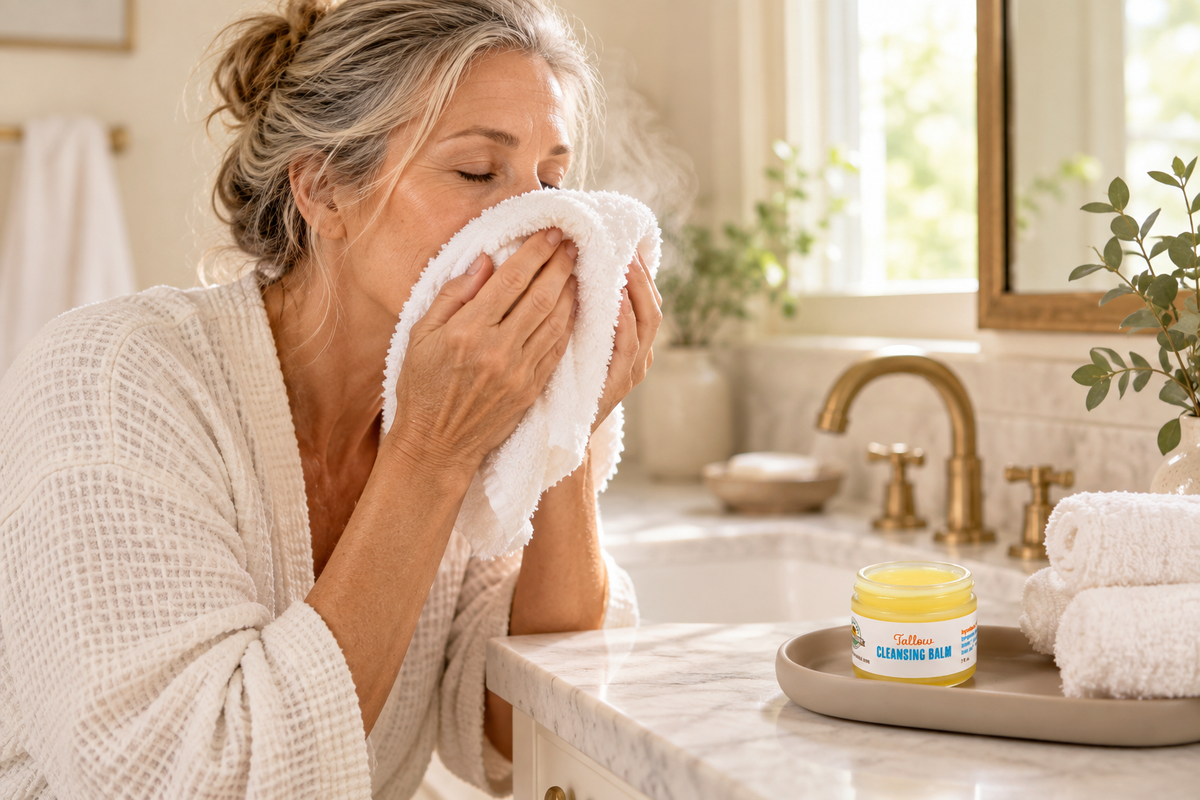
Our water buffalo tallow comes from animals raised on our own regenerative Georgia farm. I render it with a low-and-fast method because preserving the character and integrity of this unusual farm-grown lipid matters to me.
But even beautifully made tallow is not right for every person or every situation. Skin is individual. A product that feels deeply nourishing to one woman may feel too rich to another.
Honest skincare leaves room for that truth.
A gentler question to ask your skin
The beauty industry has trained us to look at aging skin and ask:
What should I fix next?
Perhaps there is a better question:
What does my skin need in order to function comfortably now?
Sometimes the answer may be water. Sometimes it may be fewer irritating products, a gentler cleanser, protection from excessive sun exposure, or guidance from a dermatologist.
And sometimes the missing piece is lipid support.
Moisture still matters. But moisture without the lipid structure that helps retain it can become a cycle of constant application and temporary relief.
As skin changes, the goal does not have to be forcing it to behave as it did at 25. The goal can be learning how to care for it beautifully at 45, 55, 65, and beyond.
That is the kind of skincare journey I believe in—not correcting a face that has lived, but supporting skin that is still living.
The simple takeaway
Hydration supplies water.
Lipids help soften, cushion, and support the protective surface that keeps water from escaping too quickly.
Aging skin may need both. But if you have been adding more and more hydration without finding lasting comfort, moisture may not be the whole answer.
Your skin may be ready for lipids.
A note on the science
The skin barrier is formed in part by an organized lipid matrix composed primarily of ceramides, cholesterol, and free fatty acids. Research also documents age- and menopause-related changes in sebum, stratum-corneum lipids, hydration, and other aspects of skin function. You can explore the science further in these reviews and studies: